
India's core infrastructure industries recorded a significant growth of 7.9 per cent in September 2026, up from 3.1 per cent in the previous year, primarily fuelled by robust performances in iron ore, electricity, and cement production.

Indian benchmark indices Sensex and Nifty closed higher for the second consecutive day, primarily driven by robust buying in IT stocks following strong quarterly results and positive global trends. Tech Mahindra notably surged over 8% after reporting a significant jump in net profit.

India's nine key infrastructure sectors recorded a three-month low growth of 4.8 per cent in August, primarily due to reduced production in coal, natural gas, crude oil, and fertiliser, according to government data.

India's services sector experienced its strongest growth in three months in September, with the HSBC India Services PMI Business Activity Index rising to 55.2, driven by a sharp increase in new orders and strengthening domestic demand.

The Automotive Research Association of India (ARAI) has launched comprehensive conformity assessment and certification services for drone manufacturers, aiming to streamline the type approval process for Unmanned Aerial Systems (UAS) in India. This initiative supports the rapidly expanding drone sector by ensuring design, quality, and performance meet evolving safety and airworthiness standards.

Indian equity benchmarks Sensex and Nifty rallied up to 1 per cent in early trade, driven by strong performance in IT stocks, Reliance Industries, and favourable global market sentiment, rebounding from previous losses.
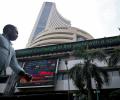
Indian equity benchmarks, the Sensex and Nifty, opened higher on Friday, driven by a strong rally in IT stocks, despite a significant overnight decline in US technology shares and broader Asian markets. Experts anticipate further market support from falling US bond yields, a strengthening rupee, and a substantial liquidity inflow following the Jio Platforms IPO allotment. Track

Indian benchmark indices Sensex and Nifty rebounded in early trade after two days of losses, driven by easing crude oil prices and strong buying in blue-chip IT stocks, despite continued global uncertainties. Track Sensex, Nifty on September 30.


The Indian corporate sector demonstrated strong credit quality in the first half of FY27, driven by robust balance sheets and healthy liquidity, despite facing risks from elevated crude prices, inflation, and global interest rates.

Indian IT stocks have experienced their most significant weekly surge in 18 years, with the Nifty IT index climbing 11.72 per cent, as a global sell-off in AI-linked equities redirected investor attention towards India's IT services sector. This shift aligns with a JP Morgan report identifying India as a 'natural AI hedge' due to its large, liquid market and strong domestic institutional investor base.

Godrej Properties reported a significant 62 per cent decline in consolidated net profit to Rs 154.15 crore for the September quarter, primarily due to higher expenses, while its sales bookings also fell by 6 per cent to Rs 8,008 crore.

'The Indian market has struggled over the past two years.' 'It peaked in September 2024, and although it has moved up and down since then, investors have not really made money.'

Indian benchmark equity indices, Sensex and Nifty, closed lower for the fourth consecutive session, driven by a surge in crude oil prices above USD 114 per barrel due to escalating tensions in West Asia, coupled with broad-based selling and FII outflows.
ICICI Bank announced a significant 22.28 per cent increase in its consolidated net profit, reaching Rs 16,333.18 crore for the September quarter, primarily fuelled by a 30 per cent jump in its loan portfolio.

A Crisil report indicates that India is the world's fastest-growing polymer compound market, contributing 13% to the global industry. Driven by increased manufacturing in automotive, electronics, and infrastructure, the domestic sector is projected to reach USD 16.5 billion by FY2031, with significant demand from various pipeline and cable segments.

Domestic telecom gear maker HFCL reported its highest-ever quarterly consolidated net profit of Rs 394.22 crore for the second quarter ended September 30, 2026, a multi-fold increase from Rs 72 crore a year ago, primarily due to strong demand for optical fibre cables from AI data centres.

Indian equity benchmarks Sensex and Nifty extended their losses for a third consecutive session, with the Sensex declining 460.30 points and the Nifty dropping 123.70 points, primarily due to surging crude oil prices driven by escalating tensions in West Asia and weak global cues.

Indian benchmark indices, Sensex and Nifty, closed lower on Tuesday, with the Sensex declining 329.91 points to 74,529.08 and the Nifty dipping 85.30 points to 23,329, primarily dragged by underperformance in IT, financial, and capital goods stocks despite positive global market trends and easing crude oil prices.
HDFC Bank has initiated an internal enquiry into the alleged leak of confidential information by two senior executives, with investigators examining whether the disclosed information was misused.

Indian banks are projected to achieve healthy profit growth in the second quarter of financial year 2027 (Q2FY27), driven by lower credit costs, robust advance growth, and fee income. However, net interest margins (NIMs) are expected to face pressure due to significant mobilisation of foreign currency non-resident (bank) FCNR(B) deposits.

Indian benchmark indices Sensex and Nifty saw a sharp rebound in early trade, driven primarily by a rally in IT stocks and a decline in crude oil prices, even as global markets faced selling pressure due to US inflation concerns. Track Sensex and Nifty on
PCBL Chemical Ltd's subsidiary, Nanovace Technologies Ltd, has formed a new wholly-owned subsidiary, Nanovace Advanced Materials Ltd, to focus on advanced battery materials and next-generation energy storage technologies for various sectors including electric vehicles and consumer electronics.

India's white-collar job market experienced a 14 per cent year-on-year growth in August, with the auto, healthcare, and retail sectors leading the surge, according to a report by Naukri.com.

Indian benchmark equity indices, Sensex and Nifty, significantly recovered from sharp early losses, driven by buying in State Bank of India and Reliance Industries, alongside fresh foreign fund inflows, despite declines in Axis Bank and HDFC Bank.

India's eight core infrastructure sectors recorded a two-month high growth of 1.7 per cent in April, primarily boosted by strong performances in steel, cement, and electricity production, according to government data.

Domestic passenger vehicle dispatches in India increased by 21.8 per cent year-on-year to 4,54,574 units in September, while two-wheeler sales rose 13.5 per cent to 24.63 lakh units, according to SIAM data.

The International Monetary Fund (IMF) has increased India's growth forecast to 7 per cent for 2026-27, up from 6.4 per cent, attributing this robust outlook to resilient domestic demand and strong services activity, positioning India as one of the fastest-growing major economies.

Congress MLA Jignesh Mevani and three others have been booked in a second FIR for allegedly obstructing police, creating commotion at a police outpost, and violating the poll code during the Gandhinagar civic body elections. The charges include unlawful assembly and rioting, stemming from an incident where Mevani and supporters allegedly interfered with police questioning a man at a Sector-13 police outpost on October 9.

Anup Bagchi, the incoming MD & CEO of HDFC Bank, is set to become India's highest-paid bank CEO with a proposed target annual compensation package of approximately 35.9 crore, including a significant variable pay component and a one-time joining bonus.

India's leading private-sector banks, including HDFC Bank, Axis Bank, and Kotak Mahindra Bank, reported robust deposit growth in the July-September quarter (Q2FY27), significantly aided by the Reserve Bank of India's concessional FCNR(B) swap window.
HDFC Bank reported a 5.55 per cent increase in consolidated net profit to Rs 20,700 crore for the September quarter, with incoming MD and CEO Anup Bagchi indicating a focus on strengthening the balance sheet and addressing retail vertical concerns post-merger.

India's industrial production increased by 6.7 per cent in July 2026, primarily driven by a 7.3 per cent growth in the manufacturing sector and a strong 8.7 per cent rise in electricity and gas supply, despite a contraction in the mining sector.

Indian benchmark indices, Sensex and Nifty, recovered early losses on Wednesday, driven by strong buying in IT stocks and HDFC Bank, sustaining the previous session's recovery despite FII outflows. Track Sensex, Nifty on October 14.

Wipro reported a marginal 1.40 per cent decline in consolidated net profit to Rs 3,200.6 crore for the July-September quarter of FY27, despite a 9.1 per cent increase in revenue from operations to Rs 24,752.7 crore.

Indian equity benchmark indices extended losses for a second consecutive session, with the Sensex dropping 143 points, driven by a sell-off in power, banking, and financial stocks, coupled with elevated crude oil prices and persistent FII selling.
Indian benchmark indices Sensex and Nifty traded lower in early sessions due to profit-taking and significant foreign institutional investor (FII) outflows, despite strong performance from IT stocks like Tech Mahindra. Track Sensex, Nifty on October 16.

'... but runs with the rigour and discipline of a large enterprise.'

President Droupadi Murmu, Prime Minister Narendra Modi, and Vice President C P Radhakrishnan attended Dussehra celebrations in New Delhi on Tuesday. Effigies of Ravan, Kumbhkaran, and Meghnath were burnt at various Ramleela grounds, with dignitaries delivering messages on truth, righteousness, and fighting social evils. One committee also burnt a cockroach effigy to symbolise filth, leading to a complaint from AAP Delhi chief Saurabh Bharadwaj.

Indian stock markets witnessed a significant rebound, with the Sensex rallying 1,109 points and the Nifty closing above 22,720, driven by strong performances in IT and financial sectors, a recovering rupee, and Finance Minister Nirmala Sitharaman's comments on long-term capital gains (LTCG) tax.
